New regulations, such as the European Packaging and Packaging Waste Regulation (PPWR) and the End-of-Life Vehicle Regulation (ELVR), are driving reconsideration of product design. The PPWR will demand that packaging products be recyclable. The ELV will also require a closed-loop recycling stream for automotive components to be recycled and reused within the market.
Design for Recyclability (D4R) is an approach that creates products that can be effectively collected, sorted, and recycled within existing waste management systems. It aims to maximise the recovery of valuable materials while reducing contamination, production complexity, and waste. There are a few key terms used in sustainable design, the main being:
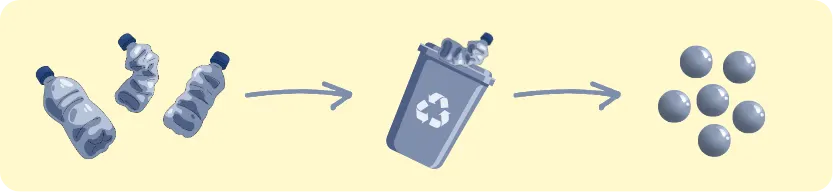


Design decisions made at the earliest stage have a direct impact on whether a product can be recycled in practice successfully. As regulations, including the PPWR and ELVR, move towards requiring recyclability at scale, design is even more pivotal for a successful future.
Recyclability is rarely decided by one factor, it is the combined effect of many individual design choices.

To comply with the PPWR, you must incorporate post-consumer recycled (PCR) content to meet the mandatory recycled content thresholds...

If moving directly to PCR is challenging, post-industrial recycled (PIR) solutions enable recycled content without compromising quality...

Mechanically recycled, bio-circular and bio-based plastics grades offer lower cradle-to-gate GHG emissions than non-recycled virgin plastics...

With the Green Claims Directive, credibility matters increasingly. Closed loop recycling streams enable recycled products to be used continuously...
Designing for recyclability starts with understanding what happens to a product at the end of its life. By considering disposal and recovery pathways early in the design process, companies can reduce compliance risks, avoid costly redesigns, and improve long-term material efficiency.
Not all products will follow the same end-of-life route. The most effective approach depends on how materials are collected, sorted and processed in real-world systems. Evaluating these pathways early helps ensure that materials remain recoverable and aligned with evolving regulatory requirements.
Ensure materials and product design are compatible with established recycling streams, enabling recover into usable recyclate.
Where recycling is not feasible, understand whether materials are more likely to be incinerated with energy recovery, and consider the impact on circularity targets.
Designing for durability, reuse, or refurbishment can extend the product lifecycle and reduce reliance on single-use systems.
Identify technical or infrastructure barriers, such as multi-material constructions or lack of sorting capability, and account for these in design decisions.
Regulations are increasingly shaping how products and packaging are designed, moving sustainability from a voluntary initiative to a defined set of requirements. Frameworks such as PPWR and the ELV Regulation are pushing manufacturers to consider recyclability, material efficiency, and end-of-life outcomes at the earliest design stages.
This means design decisions must now balance performance, cost, and compliance, ensuring products are not only fit for purpose but also aligned with evolving circular economy targets whilst not compromising on product safety, processing or productivity.
PPWR is accelerating the transition to packaging that is recyclable at scale, driving changes in both material selection and product design. Manufacturers are now adopting:
While PPWR sets minimum requirements, many companies are already going further to meet customer expectations and future targets. The EN 18120 directive gives constructive advice on how to design for the recycling of plastic packaging, aiming to ensure compliance with the PPWR.
The End-of-Life Vehicles (ELV) Regulation is encouraging a shift towards circular material use and design for recovery within the automotive sector. This is driving manufacturers towards:
Designing with these principles early helps ensure compliance while maintaining performance and long-term value.
Designing for recyclability requires more than material selection. It involves understanding how design, processing, and end-of-life outcomes interact. Resinex supports customers across the full development process, helping translate sustainability requirements into practical design and manufacturing decisions.
At the early design stage, we work with customers to evaluate material options, recyclability requirements, and regulatory considerations. This includes selecting polymers that align with established recycling streams, reducing multi-material complexity, and balancing performance with sustainability targets.
Our technical team provides guidance on how design choices such as wall thickness, geometry, colour, and additives can influence both product performance and recyclability. By identifying potential challenges early, we cna help minimise the need for costly redesigns later in the process.
Resinex supports customers with simulations using Moldflow, and processing insights, helping you optimise part design and manufacturing conditions. This helps achieve improved moulding and part quality, identify potential defects, and optimise cycle times.
Beyond design and processing, we help ensure our solutions are aligned with regulatory requirements and recyclability criteria, supporting documentation, material data, and certification where needed. When ready to sample, our professional team can support with material trials, and after validation are on hand to help you troubleshoot any difficulties.
By combining material expertise, technical support, and application knowledge, Resinex helps customers move from concept to production with greater confidence, balancing performance, cost, and recyclability at every stage.
Our technical and commercial team is available to discuss material requirements, recycled content targets, regulatory obligations, and supply feasibility.

11 The Valley Centre
Gordon Road
High Wycombe
Buckinghamshire
HP13 6EQ
United Kingdom
