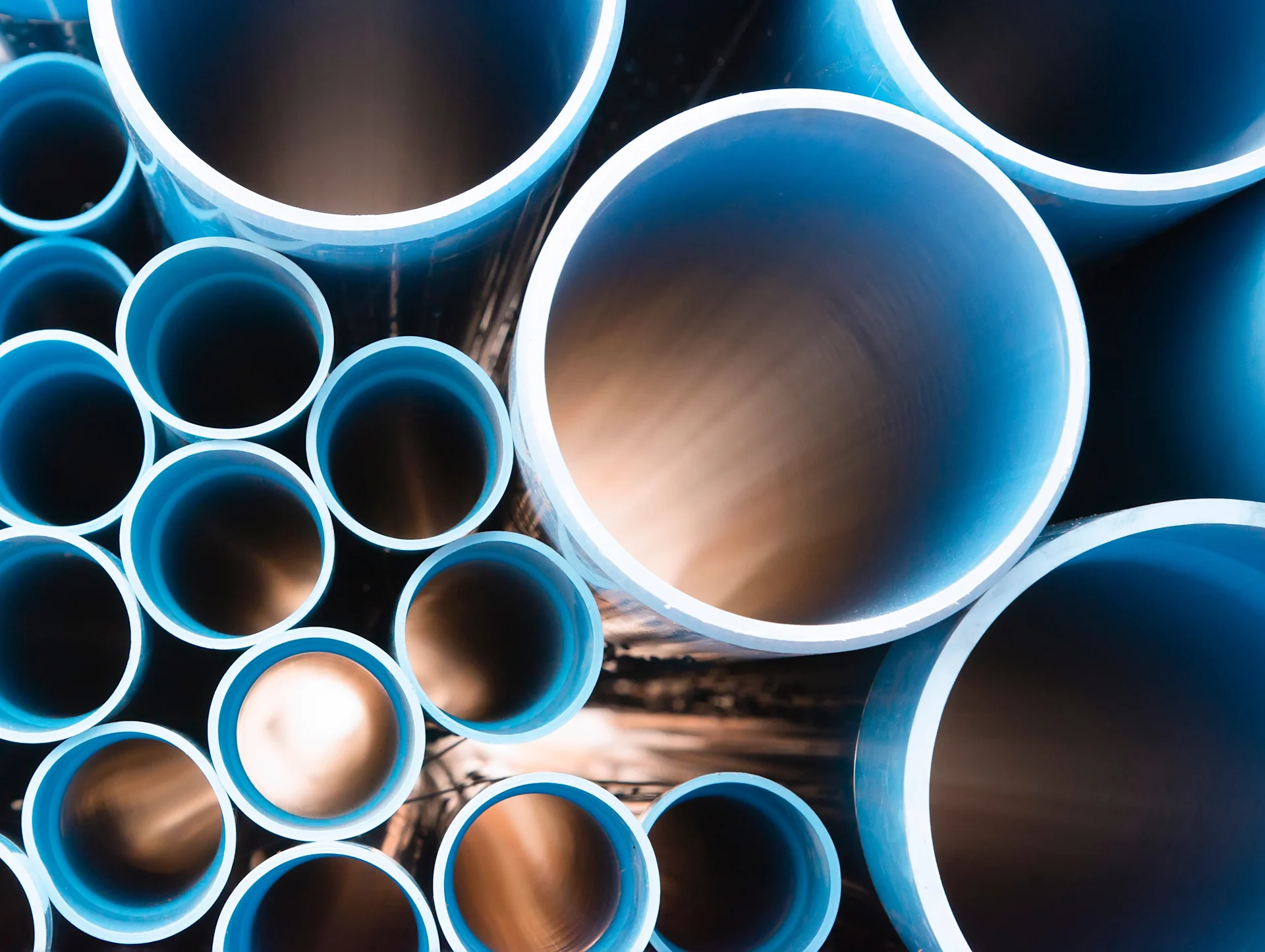
Process Basics: Utilises thermoplastic granules that are heated, melted, and homogenized within a barrel by an Archimedean screw through both shear and heat.
Continuous Production: Capable of producing pipes of virtually unlimited length, making it ideal for extensive piping needs.
Custom Lengths: Pipes are extruded continuously and then cut to desired lengths post-cooling.
General Use: Hosepipes for general watering or washing.
Industrial Applications: Mains water pipes for infrastructure.
Specialized Use: Pneumatic hoses for air tools and systems.
Motor and Drive: An electric motor and hydraulic drive rotate the screw, pushing the plastic granules through the heated barrel.
Die Shaping: A die at the barrel's end shapes the molten plastic into the pipe's profile.
Cooling Process: After shaping, the pipe passes through a water bath with sizing formers, where it solidifies.
Speed Regulation: Take Off Rollers ensure the extrusion process is at the correct speed to maintain size and strength.
Vacuum Calibration: For hollow, high-tolerance pipes, vacuum calibration devices within the cooling bath ensure dimensional precision.
Cutting and Coiling: Pipes are cut for transportation and application-specific uses, with longer pipes often coiled for convenience.
Co-Extrusion: This method integrates different materials or colors into a single pipe profile using twin head extruders for layered pipe structures.
Typical Materials: Thermoplastic Elastomers (TPEs) and Polypropylene (PP) are commonly used in pipe extrusion.
Product Range: Includes essential items like hosepipes, mains water pipes, and pneumatic hoses.
Pipe extrusion continues to be essential in the production of various types of pipes, underpinning a range of sectors from residential to industrial applications.
Have any questions or need assistance? Feel free to reach out via email or our contact form, and we’ll be more than happy to assist!
Expect a swift response from our dedicated team.
🚀 Email us—we’ll be quick to respond: communication@resinex.com